Thought Leadership
Stephen Phinney, PhD, RD
What is Euketonemia: Evolutionary Insights for Metabolic Health
2026-01-05
●
15 min read

Key Points
Beginning with use of the terms nutritional ketosis and keto-adaptation, the last few decades have seen a quiet but significant explosion in our understanding of the beneficial roles that ketones, under-appreciated metabolites, play in human health and function.
Despite this scientific progress, there remains a linguistic bias in the descriptors applied to the physiologic levels of nutritional ketosis, typically high, increased, elevated, and hyper; all of which tend to carry negative connotations.
More accurate communication of the potential roles of ketogenic therapies, both to colleagues and the public, would be achieved by defining the beneficial range of nutritional ketosis as ‘euketomenia’, reflecting the standard terminology used to define the healthy physiological range for blood glucose as euglycemia.
A Brief History of Ketones
The role of ketosis and ketones in normal human metabolism and disease has a long, interesting, and complex history, yet their functions remain misunderstood. Unfortunately, this topic has been hijacked for the last century by an over-simplified perspective that until only recently labeled any level of ketones in humans as ‘toxic by-products of fat metabolism’, and perhaps sometimes coupled with a touch of bias against aboriginal hunting cultures. Recently, however, there seems to be a growing recognition of the important – and often beneficial – nuances of human ketone metabolism.
Keto-acidosis in humans was first noted over 3500 years ago by a ‘sweet odor (now called ‘ketone breath’) in patients with symptoms of uncontrolled diabetes. In the 17th century diabetes was defined as a disease and linked to sugar in the urine, diagnosed by taste. But it was not until the late 1800s that acetone and the two ‘ketone bodies’, acetoacetate and beta-hydroxybutyrate (the latter two being organic acids), were chemically defined and found to be dramatically increased in patients with diabetic keto-acidosis. Because of this association, ketones were historically regarded as toxic compounds derived from the partial metabolic breakdown of fat.
Acetone and its relationship to ketosis.In both medical and lay literature, reference to ketosis involves three compounds referred to as ‘ketone bodies’. Beta-hydroxybutyrate (BHB) and acetoacetate (AcAc) are both 4-carbon fatty acids with one added oxygen. Both are made from fat, predominantly in the liver, and circulate in the blood. Both can be taken up by cells throughout the body and used for energy. Acetone is a volatile 3-carbon compound produced at a slow rate from the spontaneous breakdown of AcAc, also circulating in the blood from which it can be cleared in the urine or by the lungs. At the very low ketone levels with a high carbohydrate diet it is imperceptible to the nose. But with a very low carbohydrate diet or fasting it becomes increasing noticeable as a ‘sweet’ aroma, commonly called’ ketone breath’. At the extreme levels associated with ketoacidosis, the acetone aroma is quite strong and perceivable from the bedside. Breath acetone levels can be quantitated given a proper device, providing a non-invasive method to measure nutritional ketosis.
In the early 20th century, studies of animals and humans subjected to periods of fasting up to a month or more (Benedict, 1915) determined that blood ketones in the first week rose to levels 10-50 times those seen in the fed state, but did not increase further to the levels associated with keto-acidosis — typically more than 100 times the level seen in healthy people eating a carb-rich diet. At the same time, in studies of humans fasting over multiple weeks, it was noted that muscle was broken down even when adequate body fat remained. But this breakdown of body protein was highest in the initial week or two of fasting and then declined to a lower rate that could allow a normal-weight adult to survive for up to 2 months before the total protein loss would be fatal (refs: Cahill 1968, Drenick 1968). And despite the lack of dietary carbohydrate during a total fast and a very modest rate of body protein breakdown used to make glucose (aka, gluconeogenesis), blood glucose levels remained in the low normal range. Technically, this ‘normal range’ is called euglycemia – the range for blood glucose values that are associated with optimum body function and long-term health.
This line of research on starvation ketosis resumed in the 1960s, when it was demonstrated that the human brain could get most of its energy needs (typically about 600 Calories per day) and function normally on ketones made from fat rather than breaking down lots of body protein to make glucose (Ref: Cahill, 1966). But despite these published observations, blood ketone values above the very low levels associated with a carbohydrate-rich diet were still considered abnormal and most healthcare professionals continued to be taught that ketones were toxic byproducts of fat metabolism. Thus, it was (and remains) common to refer to any measurable level of ketones in blood or urine, whether induced by diet, starvation, or uncontrolled diabetes as high, elevated, increased, or hyper-. All these terms have negative connotations suggesting excessive levels, and yet only when the blood BHB level is above that seen with sustained fasting does this have overt pathological implications.
The 1970s saw the advent of multiple low carbohydrate and very low-calorie diets promoted for rapid weight loss. Composed of real food or liquid formulas, these diets resulted in blood ketones maintained about halfway between the carb-fed state and fasting (typically 2.0 – 4.0 mM). Some of these were poorly formulated (ref: Wikipedia) and frankly dangerous (ref: Wadden, 1985; Sours, 1981), and most were not suitable for long-term use. Their typical short-term use tended to result in the classic yo-yo diet pattern of repeated use causing wide swings of weight loss followed by rapid regain, adding to the general negative perception of ketogenic diets.
Within this two-decade period dominated by fad ketogenic diets (1975 – 1995), however, a number of published research studies actually demonstrated that a well-formulated ketogenic diet could maintain muscle mass and function while sustaining well-being and endurance performance (Phinney 1980, Phinney 19831,2). These studies also reinforced the earlier observations that it takes weeks to months for a human to fully adapt to using ketones rather than glucose, a process that was given the name ‘keto-adaptation’ (Phinney, 1980).
And to clearly differentiate this state from ‘diabetic keto-acidosis’, the level of blood ketones induced by a well-formulated ketogenic diet was given the name ‘nutritional ketosis’ (Sargent 1958, Phinney 1980).
Despite a growing body of peer-reviewed research, names matter. Within the last two decades, well-formulated diets resulting in sustained nutritional ketosis have increasingly gained credibility as practical tools to treat obesity and type 2 diabetes, not to mention their long-standing proven benefits for people with drug resistant-seizures (Wilder 1921; Freeman 2007) and an increasing list of probable clinical targets (see below). But the published medical literature is still characterized by the frequent use of adjectives with negative connotations such as high, elevated, increased, and hyper to describe the physiologically normal blood ketone levels induced by well-formulated ketogenic diets.
This brings us to the need for an appropriate term to denote healthy levels of blood ketones. Just as the term euglycemia denotes a range for blood glucose values associated with current and future health, it is therefore physiologically appropriate to use an analogous term, euketonemia (Yuen 2014, Volek 2024), defining a similar range for this beneficial metabolite.
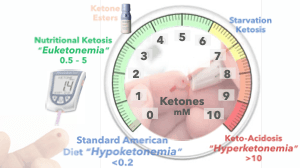
But this is where this comparison becomes complex. For both blood glucose and blood ketones, levels above the physiologically healthy ranges imply overt disease and potentially fatal effects at extreme levels. But on the low end, hypoglycemia is associated with immediate risks and symptoms. This is in contrast to ketones, in which case most humans can live for decades with minimal blood levels of beta-hydroxybutyrate and acetoacetate (i.e., hypoketonemia) without any overt symptoms; that is, until they develop conditions such as type 2 diabetes, obesity, and autoimmune disease, which share a common association with underlying metabolic inflammation.
Thus the benefits of euketonemia have been easy to ignore in most people for years or decades, especially when commonly referred to in terms with harmful connotations. But as outlined below, research performed over the last decade has revealed that BHB has a number of physiological roles that transcend its historical function as an ‘alternative fuel’ for the brain. These include regulating the genes that protect us from oxidative stress and inflammation (Shimazu, Newman, Youm) to playing an important role in normal gestation and fetal development (Shibata).
What is the range of blood ketone levels encompassing euketonemia?
There are many physiological and patho-physiological indicators that can help define the lower and upper limits of euketonemia (see figure below).
Defining the lower range (hypoketonemia)
o Blood BHB levels in healthy adults eating adequate protein and >130 g/d of carbohydrate, these dietary conditions result in blood BHB <0.3 mM.
o Exceptions include immediately following high-volume endurance exercise (e.g., running a marathon) and fasting longer than 12-15 hours, when blood BHB can rise > 0.5 mM despite prior liberal dietary carbohydrate.
o Potential ill-effects in the lower range
In the context of energy-restricted ‘balanced’ weight loss diets where blood BHB almost always remains <0.3 mM, sustained success at >5% weight loss is limited (ref: Heshka 2003)
Athletes performing high-intensity endurance exercise >2 hours without carbohydrate supplements risk ‘hitting the wall’ due to hypoglycemia.
• Defining euketonemia
o Metabolically healthy adults maintaining a well-formulated ketogenic diet typically have blood BHB levels in the 0.5 to 3.0 mM range, which can be sustained for years given adequate dietary adherence.
o Blood levels of BHB in the 0.5 - 3.0 mM range are associated with better initial and sustained weight loss and blood glucose control in patients with obesity, metabolic syndrome, or T2D when properly instructed and monitored on a well-formulated ketogenic diet (Athinarayanan 2019)
o In both trained athletes and non-athletes in vigorous training eating a well-formulated ketogenic diet to satiety, muscle strength and endurance performance are maintained with BHB levels in the 0.7 to 3.0 mM range (refs: Phinney 19832, Volek 2016, LaFountain)
o Amniotic fluid BHB in 3rd trimester human pregnancy is typically maintained > 0.5 mM due to placental ketogenesis independent of the maternal diet and blood BHB levels. (Shibata)
o Defining the upper end of euketonemia range
Differentiate starvation ketosis as a meta-stable* BHB range of 5-7 mM.
• *Definition; metastable means blood values in this range can be maintained during total fasting up to 4-6 weeks without developing ketoacidosis, but fasting beyond 8 weeks risks developing marasmus and death.
o Defining Hyperketonemia
T1D patients in the process of developing DKA may present with associated symptoms in the 5-7 mM blood BHB range because they are passing through it towards frank keto-acidosis.
Cases of frank DKA with an abnormal anion gap usually have blood BHB values >8 mM.
What is the evolutionary evidence indicating physiologic benefits of euketonemia?
● Before the advent of agriculture, the ability to thrive for all or a major part of a year on a diet providing minimal carbohydrate from gathered sources allowed humans to extend their range into temperate and then even sub-arctic and arctic regions.
o Arctic explorers who adopted the Inuit diet and lifestyle could remain healthy for a year or longer without resupply or dietary supplements. Refs: Rae 1954, Schwatka 1965, Stefansson 1917, McClellan 1930).
● Ancient bacteria that still exist today store ketones polymers for fuel (rather than fat or glycogen) and use these stored ketones to deal with environmental stress.
● BHB is also substrate for the formation of ladder-like chains (i.e, polymers) that are structural comportments in the membranes of all our cells, and vital for their normal function (Huang, Cao, Seebach).
● The human fetus develops in an euketonemic amniotic environment inside the mother’s uterus and sustained by the placenta, even if the mother herself is not in a comparable state of nutritional ketosis (Shibata)
● Human infants who are naturally breast-fed get relatively little carbs early in life, and typically develop ketones in the euketonemic range within 2-4 hours after each feeding. Thus, any infant who goes more than 4 hours between feedings is at least temporatily euketonemic. (Cahill, 2006) This is a physiologic necessity as the infant brain needs either glucose or ketones for its fuel supply, and the infant liver is inadequate to feed the brain by gluconeogenesis alone.
● As mentioned above, any human who fasts for more than 2 days does not have adequate body glucose/glycogen stores or glucose production capacity to maintain basic brain function without inordinate breakdown of body protein. The ability to make enough ketones from body fat stores to sustain normal brain function has allowed our human ancestors to survive prolonged famines and to migrate across deserts and oceans.
What are the physiologic mechanisms for the benefits of NK besides providing the brain with energy?
● Heart function and health,
o more work without increased O2 use
o Keto-adaptation doubles fat oxidation at rest and with exercise (Phinney 1983, Volek 2016) enabling the metabolic flexibility with a high fat diet to optimize membrane and tissue fat content, including keeping blood saturated fat levels low through selective oxidation despite increased dietary intake.
● Liver function
o Liver ketogenesis to maintain euketonemia typically consumes 50 g of triglycerides per day to produce 100 g of ketones in a keto-adapted adult. This fat mobilization is separate from the liver’s secretion of triglycerides via VLDL, and thus dramatically increases the liver’s ability to avoid steatosis, fatty liver, and steatohepatitis.
● Epigenetic regulation of inflammation
o Histone de-acetylase enabling anti-oxidant and inflammation protection (Shimazu 2013, Newman 2017)
o Inhibition of NLRP(3) inflammasome (Youm)
● Epigenetic regulation of protein metabolism
o Upregulation of protein synthesis (Wang 2024)
● Enhanced blood BCAA levels due to reduced EAA breakdown (e.g., BHB competitively inhibits the irreversible catabolism of alpha-keto-isocaproate by mitochondria and thus raising blood leucine), which promotes protein anabolism (Phinney 1983)
What medical conditions have been credibly proven to benefit from euketonemia?
● Seizures (Wilder, May Clinic Proc 1921, etc)
● Metabolic syndrome (Forsythe, Hyde)
● T2D and diabetic nephropathy (Athinarayanan)
● Obesity (Virta refs)
● Likely/possible
o Depression. (Ref: pending Volek KIND Study)
o Bi-polar
o PCOS
o Congestive heart failure
o Female infertility
o Gestational diabetes
o Fatty liver (hepatic steatosis) (Vilar-Gomez, 2019)
o Polycystic kidney disease (Weimbs 2024)
o Osteo-arthritis
o Auto-immune inflammatory conditions
▪ Psoriasis
▪ RA
▪ Crohn’s Dz (ref: Koutnik)
o Irritable bowel syndrome
o T1D (Koutnick)
• Alzheimer’s Dz (ref: Kim)
• Parkinson’s Dz
• Aging (Wallace)
References
Benedict FG. Chemical and Physiological Studies of a Man Fasting Thirty-one Days. Proc Natl Acad Sci. 1915. 1(4):228–231. doi: 10.1073/pnas.1.4.228
Cahill GF Jr, Owen OE. Starvation and survival. Trans Am Clin Climatol Assoc. 1968;79:13-20. PMID: 5667163; PMCID: PMC2441175.
Drenick, E. J., Hunt, I. F., & Swendseid, M. E. (1968). Influence of fasting and refeeding on body composition. American Journal of Public Health and the Nations Health, 58(3), 477-484.
Cahill GF Jr, Herrera HG, Morgan AP, Soeldner JS, Steinke J, Levy PL, Reichard GA, jr., Kipnis DM. Hormone fuel interrelationships during fasting. J Clin Invest 1966; 45:1751-1769.
https://en.wikipedia.org/wiki/The_Cambridge_Diet
Wadden TA, Stunkard AJ, Brownell KD, Van Itallie TB. The Cambridge diet. More mayhem? JAMA. 1983. 25;250(20):2833-4.
Sours HE, Frattali VP, Brand CD, et al. Sudden death associated with very low calorie weight reduction regimens.
A J Clin Nutr. 1981. 34:453-461
Phinney SD, Horton ES, Sims EA, Hanson JS, Danforth E, Lagrange BM. Capacity for moderate exercise in obese subjects after adaptation to a hypocaloric, ketogenic diet. The Journal of clinical investigation. 1980. 66:1152-61.
Phinney SD, Bistrian BR, Wolfe RR, Blackburn GL. The human metabolic response to chronic ketosis without caloric restriction: physical and biochemical adaptation. Metabolism. 1983. 32:757-68.
Phinney SD, Bistrian BR, Evans WJ, Gervino E, Blackburn GL. The human metabolic response to chronic ketosis without caloric restriction: preservation of submaximal exercise capability with reduced carbohydrate oxidation. Metabolism. 1983. 32:769-76.
Sargent F II. Johnson RE, Robbins E, Sawyer L. The Effects of Environment And Other Factors On Nutritional Ketosis. Quarterly Journal of Experimental Physiology and Cognate Medical Sciences. October 1958 https://doi.org/10.1113/expphysiol.1958.sp001347
Wilder RM. The effect of ketonemia on the course of epilepsy. Mayo Clin Bull. 1921;2:1.
Freeman JM, Kossoff EH, Hartman AL. The Ketogenic Diet: One Decade Later. Pediatrics. 2007. 119;535-543. DOI:10.1542/peds.2006-2447
Yuen AWC, Walcutt IA. Refractory Epilepsy Controlled by an Acidosis Sparing, Euketonemic Ketogenic Diet: A Case History. 2nd International Symposium on Dietary Therapies for Epilepsy and other Neurological Disorders, Edinburgh, Oct 2010.
Volek JS, Kackley ML, Buga A. Nutritional considerations during major weight loss therapy: focus on optimal protein and a low-carbohydrate dietary pattern. Current Nutrition Reports. 2024 Sep;13(3):422-43.
Shimazu T, Hirschey MD, Newman J, et al. Suppression of oxidative stress by β-hydroxybutyrate, an endogenous histone deacetylase inhibitor. Science. 2013. 339:211-4. doi: 10.1126/science.1227166.
John C. Newman, Eric Verdin. Β-Hydroxybutyrate: A Signaling Metabolite. 2017. Annu Rev Nutr . 37: 51–76. doi:10.1146/annurev-nutr-071816-064916.
Youm YH, Nguyen KY, Grant RW, Goldberg EL, Bodogai M, Kim D, D'agostino D, Planavsky N, Lupfer C, Kanneganti TD, Kang S. The ketone metabolite β-hydroxybutyrate blocks NLRP3 inflammasome–mediated inflammatory disease. Nature medicine. 2015 Mar;21(3):263-9.
Wang Q, Lan X, Ke Hao, et al. Histone B-hydroxybutyrylation is critical in reversal of sarcopenia. 2024. Aging Cell. DOI 10.1111/acel.14284
Shibata T, Takata E, Takakura M, Han J, Yamada S, Satoh T. Amniotic fluid as a novel delivery route of 3-hydroxybutyrate during fetal brain development. European Journal of Obstetrics & Gynecology and Reproductive Biology. 2025. 25:114001.
Heshka S, Anderson JW, Atkinson RL, et al. Weight Loss With Self-help Compared With a Structured Commercial Program: A Randomized Trial. JAMA. 2003;289(14):1792–1798. doi:10.1001/jama.289.14.1792
Athinarayanan SJ, Adams RN, Hallberg SJ, McKenzie AL, Bhanpuri NH, Campbell WW, Volek JS, Phinney SD, McCarter JP. Long-term effects of a novel continuous remote care intervention including nutritional ketosis for the management of type 2 diabetes: a 2-year non-randomized clinical trial. Frontiers in endocrinology. 2019. 10:450805.
Volek JS, Freidenreich DJ, Saenz C, et al. Metabolic characteristics of keto-adapted ultra-endurance runners. Metabolism. 2016. 65:100-110.
LaFountain RA, Miller VJ, Barnhart EC,et al. Extended Ketogenic Diet and Physical Training Intervention in Military Personnel, Military Medicine. 2019. 184:e538–e547, https://doi.org/10.1093/milmed/usz046
Rae J. John Rae’s Correspondence with The Hudson’s Bay Company on Arctic Exploration. The Hudson’s Bay Record Society. London, 1953.
Schwatka F. The Long Arctic Search (EO Stackpole, editor). The Marine Historical Association, Inc. Mystic CT. 1965.
Stefansson V. The friendly Arctic: The story of five years in polar regions. New York: Macmillan Company; 1922.
McClellan WS, Du Bois EF. Clinical calorimetry: XLV. Prolonged meat diets with a study of kidney function and ketosis. Journal of Biological Chemistry. 1930. 87:651-68.
Huang R, Reusch RN. Poly 3-hydroxybutyrate is associated with specific proteins in the cytoplasm and membranes of Escherichia coli. Journal of Biological Chemistry. 1996. 271(36):22196-202.
Cao, Chike et al. Polyester Modification of the Mammalian TRPM8 Channel Protein: Implications for Structure and Function. Cell Reports, 2013. 4 (2), 302 – 315
Seebach D. No life on this planet without PHB. Helvetica Chimica Acta. 2023 May;106(5):e202200205.
Cahill GF. Fuel Metabolism in Starvation. Annu. Rev. Nutr. 2006. 26:1–22
doi: 10.1146/annurev.nutr.26.061505.111258
Forsythe CE, Phinney SD, Fernandez ML, et al. Comparison of low fat and low carbohydrate diets on circulating fatty acid composition and markers of inflammation. Lipids. 2008; 43:65-77.
Hyde PN, Sapper TN, Crabtree CD, et al. Dietary carbohydrate restriction improves metabolic syndrome independent of weight loss. JCI Insight. 2019; 4:e128308.
Vilar-Gomez E et al. Post hoc analysis of surrogate markers of non-alcoholic fatty liver disease. BMJ Open 2019. 9:e023597
Weimbs T, Saville J, Kalantar-Zadeh K. Ketogenic metabolic therapy for chronic kidney disease – the pro part. Clinical Kidney Journal. 2024. 17:sfad273, https://doi.org/10.1093/ckj/sfad273
Koutnik AP, Klein S, Robinson AT, Watso JC. Efficacy and safety of long-term ketogenic diet therapy in a patient with type 1 diabetes. JCEM Case Reports. 2024. 2(7):luae102.
Kim HN,, Ji Hyun Lee, John Boscardin, John C. Newman. Plasma β-hydroxybutyrate concentration, genetic risk, and the incidence of Alzheimer’s disease: A prospective study of 261,933 participants. Clinical Nutrition. 2025, 46:1-9
Roberts MN, Wallace MA, Tomilov AA, Zhou Z, et al. A ketogenic diet extends longevity and healthspan in adult mice. Cell metabolism. 2017. 26:539-46.
1.2%
Average Improvement
8.4kg
Average Change
67%
Success Rate
Clinical Implications
These findings suggest important therapeutic applications. The magnitude of improvement observed provides valuable insights for clinical practice and patient care strategies.
Key Takeaway
This research demonstrates the effectiveness of nutritional ketosis interventions in clinical settings, providing evidence-based support for therapeutic applications.
References
Lead Author, et al. Study title and findings. Journal Name. 2024;41(12):2634-2645.
Researcher, et al. Twelve-month outcomes of randomized trial. Scientific Journal. 2023;7(12):304.
Expert, et al. The effect of nutritional interventions. Medical Research. 2023;5:36.
Contact Us
952 School Street, Suite 212
Napa, CA 94559