MODULE 1
Foundations: Understanding the Rationale
The pathophysiology, history, measurement, safety, and evidence base for therapeutic ketogenic nutrition in metabolic disease.
Learning Objectives
Explain the pathophysiology of insulin resistance as carbohydrate intolerance
Articulate the mechanistic rationale for ketogenic nutrition in metabolic disease
Discuss the historical context and evidence base for ketogenic interventions
Differentiate between therapeutic ketosis and pathological diabetic ketoacidosis
Identify appropriate and inappropriate candidates for therapeutic ketogenic intervention
In this module
Historical Evolution of Nutritional Ketosis Research: From Epilepsy to Multiple Disease States
Long before the first anti-seizure medication was synthesized, clinicians were leveraging metabolic state as medicine — fasting and carbohydrate restriction were documented therapeutic tools in ancient Greek, biblical, and early Islamic medical traditions. The modern ketogenic diet emerged in the 1920s as a structured clinical intervention for epilepsy, deployed precisely because no pharmacological alternatives existed, yet it worked — and worked broadly. Unlike most drugs, which are engineered to engage a single molecular target, nutritional ketosis induces a wide-spectrum metabolic shift that touches energy substrate utilization, inflammation, oxidative stress, mitochondrial function, and hormonal signaling simultaneously. This mechanistic breadth explains why the science has expanded well beyond seizure management to include insulin resistance, type 2 diabetes, obesity, cardiovascular risk, and neurodegeneration. For registered dietitians, this history matters: the well-formulated ketogenic diet is neither a trend nor a fad, but a precision lifestyle intervention with deep roots, a coherent mechanism, and a maturing literature.
We’ve built these educational modules around the therapeutic use of ketogenic nutrition in metabolic disease, and our starting point will be with insulin resistance.
SECTION 1.1
Metabolic Context: Insulin Resistance as Carbohydrate Intolerance
Insulin resistance is perhaps the most consequential metabolic derangement of the modern era, underlying a spectrum of chronic diseases that collectively represent the leading causes of morbidity and mortality worldwide (Reaven 1988). At its core, insulin resistance can be understood through a clinically useful framework: the inability to process dietary carbohydrate appropriately — which can be described as carbohydrate intolerance.
The Physiology of Insulin Resistance
Under normal metabolic conditions, dietary carbohydrates are broken down to glucose, which enters the bloodstream and triggers pancreatic beta-cell secretion of insulin. Insulin serves as the key that unlocks cellular glucose uptake, primarily in skeletal muscle, adipose tissue, and liver. In insulin-resistant states, this key becomes less effective — receptor signaling downstream of the insulin receptor (including IRS-1, PI3K, and Akt pathways) becomes impaired, requiring progressively higher insulin concentrations to achieve the same metabolic effect (Kraft 1975).
This compensatory hyperinsulinemia has far-reaching consequences beyond glycemic control. Chronically elevated insulin:
Promotes adipogenesis and impairs lipolysis, driving fat accumulation
Upregulates sodium reabsorption in the renal tubule, contributing to hypertension
Stimulates hepatic de novo lipogenesis, increasing circulating triglycerides and small dense LDL particles
Drives cellular proliferation via insulin-like growth factor pathways
Promotes a pro-inflammatory state through NF-κB activation (Crofts 2015)
Conditions Rooted in Insulin Resistance
The clinical manifestations of insulin resistance extend well beyond type 2 diabetes. A growing body of evidence links insulin resistance to a broad spectrum of chronic disease (Crofts 2015). Proposed links to neurodegeneration, including Alzheimer’s disease — sometimes called “Type 3 diabetes” — reflect impaired brain insulin signaling (Craft 2007).
Condition
Relationship to Insulin Resistance
Type 2 Diabetes Mellitus
Endpoint of progressive beta-cell exhaustion in the setting of insulin resistance
Metabolic Syndrome
Defined cluster: abdominal obesity, hypertriglyceridemia, low HDL, hypertension, hyperglycemia
MASLD (formerly NAFLD)
Driven by hepatic de novo lipogenesis from excess carbohydrate
Polyendocrine metabolic ovary syndrome (formerly PCOS)
Hyperinsulinemia stimulates androgen production in ovarian theca cells
Hypertension
Insulin-mediated sodium retention and sympathetic activation
Atherogenic Dyslipidemia
High triglycerides, low HDL, elevated small dense LDL
Certain cancers
IGF-1 pathway activation; glucose dependence of many tumor types
Alzheimer’s disease
Proposed “Type 3 diabetes” — impaired brain insulin signaling (Michailidis 2022)
Why Standard Dietary Approaches Often Fail in Metabolic Disease
Conventional dietary guidelines — which recommend 45–65% of calories from carbohydrates — represent a fundamental mismatch for individuals with carbohydrate intolerance. Multiple large trials, including the Women’s Health Initiative, demonstrated that low-fat dietary interventions did not reduce cardiovascular events, a finding consistent with the understanding that metabolic risk in this population is driven by insulin resistance, not dietary fat per se (Howard 2006; Look AHEAD 2014).
A 2012 meta-analysis of randomized controlled trials found that low-carbohydrate diets produced more favorable effects on metabolic risk factors than low-fat diets, reinforcing the mechanistic case for carbohydrate restriction in metabolic disease (Hu 2012).
Metabolic Flexibility and the Role of Nutritional Ketosis
Metabolic flexibility refers to the ability of the body to appropriately shift between fuel sources — primarily glucose and fatty acids — in response to availability and demand. Insulin-resistant individuals characteristically display metabolic inflexibility, appearing to be “locked” into glucose oxidation and struggling to adequately upregulate fat oxidation during short periods of fasting or carbohydrate restriction (Kelley 2002).
By substantially reducing dietary carbohydrate over periods of a few days to weeks, the well-formulated ketogenic diet (WFKD) effectively bypasses the dysfunctional carbohydrate processing pathway. Insulin levels fall, enabling adipose lipolysis. Free fatty acids pass through the liver, where they undergo beta-oxidation and ketogenesis, producing acetoacetate, beta-hydroxybutyrate (BHB), and acetone. These ketone bodies become the primary fuel source for the brain, with substantial use by heart and skeletal muscle — substrates for which insulin-resistant tissue retains full metabolic competence. Importantly, oxidation of fatty acids and ketone bodies does not require insulin signaling, thereby bypassing defects in the insulin signaling cascade inherent to insulin resistance (Volek 2011). This is an important distinction, since it is widely — and incorrectly — believed that the brain requires a minimum of 130 grams of carbohydrate per day.
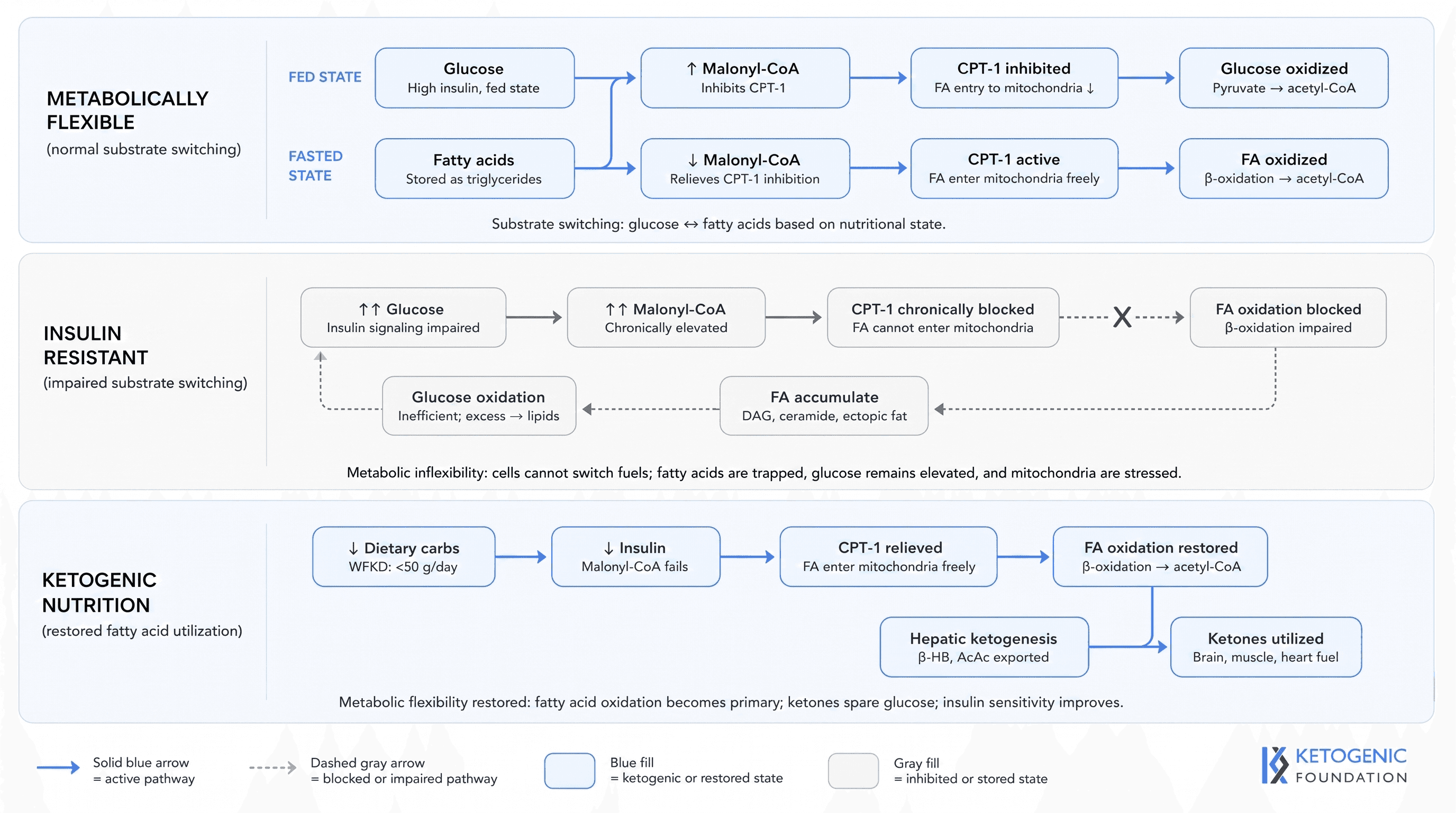
Figure 1.1
Metabolic flexibility and the glucose–fatty acid (Randle) cycle: impaired substrate switching in insulin-resistant individuals, and how ketogenic nutrition restores fatty acid utilization.
SECTION 1.2
Historical Context
Ancient Origins and Early Clinical Observation
The therapeutic use of dietary modification has ancient roots. Hippocrates (400 BCE) first documented fasting as a treatment for epilepsy, recommending abstention from food for seizure control, and early physicians consistently observed that patients experienced improved seizure control during periods of starvation (Wheless 2008). Long before a scientific framework existed to explain why, the empirical observation was already in place: removing food — and by extension, dietary carbohydrate — had profound neurological and metabolic effects.
European physicians were experimenting with low-carbohydrate approaches to diabetes as early as 1797, when John Rollo, a Scottish military surgeon, treated diabetes by prescribing a strict meat-based diet, finding that limiting carbohydrates helped control symptoms (Veves 2007). By the 1840s–1850s, physicians across Europe — including Bouchardat, Piorry, Harvey, and Chambers — observed that carbohydrates worsened conditions like diabetes, obesity, and gout. One of Dr. Harvey’s patients, William Banting, a London undertaker with obesity, published his “Letter on Corpulence” in 1863 — one of the first popular diet books — detailing successful weight loss through elimination of bread, sugar, potatoes, and beer (Banting 1863). The pamphlet established “Banting” as a common term for low-carbohydrate dieting for decades.
Indigenous Arctic Wisdom and Polar Exploration
The traditional Inuit diet — consisting of more than 75% fat — maintained persistent ketosis without adverse health effects and provided crucial real-world evidence that humans could sustain physical and mental function on an extremely low-carbohydrate, high-fat diet for extended periods (Heinbecker 1928). Arctic and Antarctic explorers unknowingly conducted some of the first systematic human observations of ketogenic nutrition: European explorers who insisted on bringing traditional foods often perished, while those who adopted indigenous dietary practices successfully mapped much of the Canadian and Alaskan Arctic.
Among the most important of these expeditions was that of Frederick Schwatka (1880–1881), who led the longest known sled journey of his time — over 3,000 miles in 14 months through the Canadian Arctic. Schwatka made the first documented observation of what Dr. Stephen Phinney would later term “keto-adaptation,” writing that “when first thrown wholly upon the native diet, one is ill-disposed to travel, but after 2–3 weeks, long exertive sledge journeys are possible” (Schwatka 1965). Vilhjalmur Stefansson, a Harvard-trained anthropologist, lived among Canadian and Alaskan Inuit for multiple expeditions and subsequently underwent a year-long medically supervised study of a meat-and-fat diet at Bellevue Hospital in 1930, demonstrating no adverse metabolic outcomes (McClellan 1930).
Evidence from non-polar indigenous cultures reinforces the same conclusions. George Catlin, who documented Native American Great Plains culture from 1830–1840, described nomadic peoples who subsisted predominantly on meat and fat, including pemmican, an energy-dense preparation of dried meat and rendered fat (Catlin 1973). Two British doctors, Orr and Gilks, spent a year in the Great Rift Valley of Kenya in 1924 documenting the Maasai — nomadic herders and essentially carnivores — who were taller, leaner, with better dentition and no evidence of nutritional deficiencies compared with their carbohydrate-dependent farming Kikuyu neighbors (Orr 1931). These observations converge on a consistent biological conclusion: humans from multiple ethnic backgrounds are fully capable of thriving on a very low-carbohydrate, moderate-protein, fat-predominant diet.
Early 20th Century Scientific Development
The transition from observational knowledge to scientific understanding accelerated in the early 1900s. In 1911, Parisian physicians Guelpa and Marie published the first modern scientific documentation of fasting for epilepsy treatment (Guelpa 1911). Then in 1921, two pivotal developments occurred in the same year: Dr. Russell Wilder at the Mayo Clinic coined the term “ketogenic diet” and formalized it as a treatment for epilepsy (Wilder 1921), and Dr. Rollin Woodyatt discovered that ketones were produced during fasting or low-carbohydrate, high-fat diets (Woodyatt 1921). By 1924, Dr. Mynie Peterman had standardized the classic 4:1 ketogenic diet protocol — 4 grams of fat to 1 gram of combined protein and carbohydrate — which became the standard of care at major medical centers (Peterman 1925).
Ironically, the very same year Wilder introduced the ketogenic diet for epilepsy, Banting and Best purified insulin — a development that revolutionized the treatment of diabetes but simultaneously cast ketones as metabolic villains, typically described as “toxic byproducts” of fat metabolism for the next century. The pharmaceutical anticonvulsant era began in 1938 with the development of phenytoin (Dilantin), displacing dietary treatment in favor of medications (Wheless 2004), and the medical community largely abandoned ketogenic therapy for many decades.
Mid-Century Metabolic Research and Modern Revival
Despite reduced clinical use, important metabolic research on nutritional ketosis continued. In the 1960s and 1970s, Dr. George Cahill’s research at the Joslin Clinic demonstrated that during prolonged fasting the human body shifts from glucose to ketone bodies — especially beta-hydroxybutyrate — as the brain’s primary fuel, establishing that this metabolic state is a normal and beneficial physiological response (Cahill 2006). In 1976, Dr. Bruce Bistrian at Harvard and MIT published the first modern case series of type 2 diabetes reversal using a ketogenic protein-sparing modified fasting diet, with all 7 patients experiencing diabetes reversal in a metabolic ward setting (Bistrian 1976).
The modern resurgence gained momentum through research and patient advocacy. Dr. Stephen Phinney’s landmark 1983 studies demonstrated that trained cyclists maintained endurance performance on a very low-carbohydrate ketogenic diet after 4 weeks of adaptation (Phinney 1983a) and formally defined “nutritional ketosis” and “keto-adaptation” in the research literature (Phinney 1983b). In 1994, the Charlie Foundation was established after young Charlie Abrahams achieved seizure control through ketogenic diet therapy after conventional treatments had failed (Freeman 1998). Subsequent large-scale prospective trials demonstrating sustained type 2 diabetes reversal ultimately brought the WFKD into mainstream clinical consideration (Saslow 2017; Hallberg 2018). The arc from Hippocrates to these recent studies spans over 2,400 years — and the core biological insight has remained consistent throughout.
SECTION 1.3
Defining and Measuring Nutritional Ketosis
The human body operates in distinct metabolic states that determine fuel-substrate utilization. The brain, which under normal fed conditions on a mixed diet is essentially obligatorily dependent on glucose, can derive up to 70% of its fuel from ketones during sustained ketosis (Owen 1967). This capacity is the metabolic foundation of the WFKD.
Metabolic State
Key Features
Fed (postprandial)
Elevated insulin; glucose oxidation predominates; fat storage active; ketone production suppressed
Fasted (12–16 hrs)
Insulin falling; glycogen depletion beginning; gluconeogenesis activating; minimal ketones (0.1–0.3 mmol/L)
Nutritional Ketosis
More than 7 days of WFKD; insulin low; hepatic ketones rise into therapeutic range (BHB 0.5–3.0 mmol/L); fat oxidation predominant
Starvation Ketosis
More than 7 days of fasting; BHB 5–7 mmol/L; muscle catabolism increasing
Diabetic Ketoacidosis (DKA)
Insulin absent (T1D); BHB 10–25 mmol/L; pH below 7.3; life-threatening
Ketone Body Production and Utilization
When hepatic acetyl-CoA from fatty-acid beta-oxidation exceeds the capacity of the TCA cycle due to low oxaloacetate availability in carbohydrate-restricted states, this increased acetyl-CoA flux is channeled into ketogenesis (Cahill 2006). The liver produces three ketone bodies: beta-hydroxybutyrate (BHB), acetoacetate, and acetone. Peripheral tissues — including skeletal muscle, cardiac muscle, kidney cortex, and the brain — express the enzymes necessary to convert BHB back to acetyl-CoA for oxidation in the TCA cycle.

Figure 1.2
Ketogenesis pathway: hepatic conversion of fatty acids to acetoacetate and BHB, with peripheral utilization in muscle and brain and integration into the TCA cycle.
Measuring Ketosis: Methods Compared
Method
Details
Blood BHB meter
Most accurate; gold standard. Requires fingerstick. Devices: Keto-Mojo, Precision Xtra. Target range 0.5–3.0 mmol/L. Cost per test varies widely (~$0.99–$5.00+).
Breath acetone meters
Non-invasive; semi-quantitative. Correlates with BHB trends but not exact values. Good for monitoring patterns across groups but may mislead individuals. Devices: Biosense, Ketonix.
Urine ketone strips
Measures acetoacetate. Only useful in the first 1–2 weeks. After adaptation, peripheral utilization increases and urine levels drop — not indicative of reduced dietary adherence.
Therapeutic Ranges and Clinical Significance
The threshold of 0.5 mmol/L BHB is conventionally defined as the lower end of nutritional ketosis. However, emerging evidence suggests that even sub-threshold elevations (0.2–0.4 mmol/L) — as seen in individuals on SGLT2 inhibitors consuming a standard diet — may confer metabolic benefits, including reduced cardiovascular event rates in large outcomes trials (Zinman 2015).
The Virta Health cohort, followed prospectively for more than 2 years, demonstrated sustained reductions in weight, blood glucose, and inflammatory biomarkers even as BHB levels declined modestly over time, suggesting that the long-term metabolic benefits of the WFKD may not require maximally elevated ketones (Bhanpuri 2018; Athinarayanan 2026).
Time Course of Keto-Adaptation
Full keto-adaptation — the physiological state in which the body has upregulated the enzymatic machinery and substrate-transport proteins necessary for efficient fat and ketone oxidation — takes significantly longer than most people anticipate. Research with keto-adapted endurance athletes demonstrates substantially higher rates of fat oxidation than conventionally trained counterparts, confirming that physiological adaptation is real and measurable (Volek 2016).
Days 1–7: Glycogen stores decrease, fluid and electrolyte shifts, early ketosis, and adaptation symptoms are common.
Weeks 2–4: Rising fat-oxidation capacity, improving cognitive clarity, and stabilizing energy.
Weeks 4–8: Substantial upregulation of fat-oxidation enzymes; ketone levels may moderate as peripheral utilization increases; exercise tolerance for normal daily activities restored.
Months 2–6: Complete keto-adaptation; full athletic performance restoration; metabolic flexibility optimized. Paradoxically, glycogen stores return to carb-fed levels despite adherence to a WFKD (Volek 2016).
Distinguishing Nutritional Ketosis from Diabetic Ketoacidosis
This distinction is among the most clinically important concepts in ketogenic diet education, as confusion about it represents a major barrier to adoption among both patients and providers. It is essential to note that dietary carbohydrate is not physiologically essential — the body can synthesize adequate glucose via gluconeogenesis in the context of a WFKD (Westman 2002).
Feature
Nutritional Ketosis vs. DKA
BHB level
NK: 0.5–3.0 mmol/L · DKA: typically above 10 mmol/L
Blood pH
NK: Normal (7.35–7.45) · DKA: Acidotic (below 7.30)
Insulin
NK: Low-normal · DKA: Absent (absolute deficiency in T1D)
Blood glucose
NK: Normal or slightly low · DKA: Usually above 250 mg/dL
Risk population
NK: Very low risk in closely monitored T2D on WFKD · DKA: Significant concern in T1D with insulin non-compliance; rare in T2D
Clinical context
NK: Deliberate dietary state; patient feels well after 1–2 weeks of adaptation · DKA: Medical emergency; nausea, vomiting, fruity breath, Kussmaul respirations, confusion
Important Note
Blood BHB concentration alone cannot reliably distinguish nutritional ketosis from impending DKA, particularly in the 3.0–8.0 mmol/L range. In metabolically healthy, insulin-sufficient individuals, prolonged fasting or high-volume endurance exercise superimposed on a WFKD can physiologically elevate BHB well above the commonly cited “nutritional ketosis” ceiling. What separates this state from DKA is not the ketone level itself but the presence of adequate circulating insulin, which continues to suppress unchecked lipolysis and preserve acid-base balance. DKA is defined by the triad of metabolic acidosis (arterial pH under 7.30 and serum bicarbonate under 18 mEq/L), hyperglycemia above 250 mg/dL, and ketosis — though euglycemic DKA can occur with near-normal glucose, particularly with SGLT2 inhibitor use. This makes co-trending of glucose and BHB, rather than BHB in isolation, essential. Red flags that warrant urgent evaluation regardless of BHB value include persistent vomiting, Kussmaul respirations, abdominal pain, and confusion — and, specifically in people with type 1 diabetes, a BHB of 1.5 mmol/L or higher accompanied by hyperglycemia and metabolic acidosis, which together are diagnostic of DKA.
SECTION 1.4
Safety and Appropriateness
Appropriate candidate selection is central to safe practice. The WFKD is well tolerated by most patients, but a small number of conditions require either avoidance or close medical coordination.
Absolute Contraindications
These conditions represent absolute contraindications and require avoidance unless managed under specialized supervision.
Absolute Contraindications
Absolute contraindications to the standard WFKD include rare inherited fatty-acid oxidation disorders (pyruvate carboxylase deficiency, carnitine palmitoyltransferase deficiency, long-chain fatty-acid oxidation disorders), porphyria, advanced liver failure, and Stage 4–5 chronic kidney disease without specialized supervision (Kossoff 2018).
Relative Cautions: Coordinate Closely With the Physician
Several situations require careful medical coordination but are not absolute contraindications. The following callouts summarize the most common scenarios encountered in practice.
Medication Coordination
Patients using insulin or sulfonylureas face a real risk of hypoglycemia during the dietary transition — medication reduction must be directed by the prescribing physician before dietary change, particularly across the first 1–2 months (Westman 2007). SGLT2 inhibitor users face a small but real risk of euglycemic DKA and require medication adjustment. Pregnancy, active eating disorders, and gallbladder disease require individualized risk–benefit assessment.
Pro Tip
There is also a reverse risk: severe hyperglycemia can occur if a medication-deprescribed patient abruptly reverses their carbohydrate restriction. Counsel patients to change carbohydrate intake gradually and only in coordination with their prescriber.
SECTION 1.5
Efficacy and Effectiveness: What Does the Literature Teach Us?
Defining Efficacy vs. Effectiveness
Efficacy: The performance of an intervention under ideal, controlled conditions (randomized controlled trials; controlled feeding studies). “Does it work when done perfectly?”
Effectiveness: The performance of an intervention in real-world practice. “Does it work when patients are living their normal lives?”
Summary of Key Efficacy Evidence
Multiple RCTs and the Virta Health prospective trial demonstrate A1C reductions of 1.0–2.0% and diabetes reversal rates of 50–60% at 1 year versus less than 5% with usual care (Hallberg 2018). Meta-analyses confirm greater short-term weight loss versus low-fat diets (Bueno 2013), and the cardiometabolic signature of carbohydrate restriction — reduced triglycerides, increased HDL — has been consistently replicated (Volek 2009).
Outcome Domain
Key Evidence
Glycemic control / T2DM reversal
A1C reductions of 1.0–2.0%; diabetes reversal rates 50–60% at 1 year with a continuous-care model (Hallberg 2018)
Weight and body composition
Greater short-term weight loss vs. low-fat diets; body-fat loss with lean-mass preservation when protein is adequate (Bueno 2013); greater weight loss at 1–2 years with remote continuous care (Athinarayanan 2019)
Triglycerides / HDL
Consistent 30–50% triglyceride reductions and HDL increase — the metabolic signature of carbohydrate restriction (Volek 2009)
Blood pressure
Significant reductions, particularly in hypertensive individuals; medication reduction commonly required (Athinarayanan 2020)
NAFLD / MASLD
Dramatic hepatic fat reductions in imaging studies; superior to low-fat approaches
Epilepsy
50%+ seizure reduction in ~50% of children with intractable epilepsy; decades of evidence (Wilder 1921; Kossoff 2018)
Limitations of the Evidence Base: Epidemiology vs. Prospective Trials
Evidence Literacy Note
Nutritional epidemiology — the dominant methodology in nutrition science for decades — relies on food-frequency questionnaires, dietary recall, and observational cohort analysis. Key limitations include recall bias, confounding, dietary-logging bias, and healthy-user bias. This does not mean epidemiology is valueless — it generates hypotheses. But conclusions derived from epidemiology alone, without RCT confirmation, should be regarded with caution (Ioannidis 2018). The dietary fat–heart disease hypothesis is the most consequential example of epidemiological inference that failed to replicate in controlled trials (Harcombe 2015).
The Gap Between Efficacy and Effectiveness
The reasons a dietary approach that works perfectly in a controlled trial may underperform in real-world practice are multifactorial: inadequate practitioner support, insufficient education about adaptation symptoms, poor electrolyte management, food-environment challenges, social pressure, inadequate protein prescriptions, and provider discouragement. This gap defines the professional opportunity — why every member of the treatment team must provide consistent guidance — and is precisely why this curriculum exists.
SECTION 1.6
Module 1 — Knowledge Assessment
QUESTION 1
A patient with type 2 diabetes asks why their dietitian is recommending a low-carbohydrate diet. What is the most accurate conceptual explanation for the WFKD rationale in this patient?
A. Carbohydrates are toxic in general and should be avoided by everyone
B. The patient’s insulin resistance represents a form of carbohydrate intolerance; reducing dietary carbohydrate bypasses the dysfunctional metabolic pathway
C. Low-carbohydrate diets work through caloric restriction alone
D. Ketone bodies are superior to glucose in all human physiological contexts
Reveal answer
QUESTION 2
A client on Day 10 reports urine ketone strips now read “trace” when they read “large” in Week 1. She believes the diet has stopped working. What is the most appropriate response?
A. Advise the client to increase fat intake to boost ketone production
B. Reassure the client that declining urine ketones after the first 1–2 weeks is expected due to increased peripheral ketone utilization; recommend transitioning to blood BHB monitoring
C. Recommend a 2-day carbohydrate refeed to restore urine ketone visibility
D. Confirm that the diet has failed and counsel on carbohydrate reintroduction
Reveal answer
QUESTION 3
Which patient is an absolute contraindication (not a relative caution) for the standard WFKD?
A. A 55-year-old woman with Type 2 diabetes taking metformin only
B. A 40-year-old man with Stage 2 CKD and well-controlled hypertension
C. A 28-year-old woman with carnitine palmitoyltransferase (CPT-II) deficiency
D. A 62-year-old man post-cholecystectomy with otherwise normal metabolic labs
Reveal answer
QUESTION 4
A colleague cites a cohort study showing higher saturated fat intake is associated with increased cardiovascular mortality. He argues this disproves the safety of the WFKD. What is the most accurate methodological response?
A. The cohort study is definitive; it is prospective and must be accepted
B. Observational nutrition epidemiology cannot establish causality; prospective controlled trials testing WFKD show favorable cardiovascular risk factor profiles
C. All nutrition studies are equally valid regardless of design
D. The ketogenic diet avoids saturated fat, so the study is irrelevant
Reveal answer
QUESTION 5
Your patient’s blood BHB is 0.3 mmol/L at 3 months into their dietary intervention. What is the most appropriate clinical interpretation?
A. The patient is not in ketosis and the diet has failed
B. This level is sub-threshold for nutritional ketosis but emerging evidence suggests sub-threshold ketone elevations may still confer metabolic benefits
C. The patient should immediately begin exogenous ketone supplementation
D. A value of 0.3 is only seen in pathological states
Reveal answer
Disclaimer
This content is provided by The Ketogenic Foundation for educational and informational purposes only and does not constitute medical, nutritional, dietetic, or other professional advice. It is not intended to diagnose, treat, cure, or prevent any disease. This content does not create any professional relationship or duty of care between The Ketogenic Foundation and any reader, nor does it create or replace any practitioner–client or provider–patient relationship. Nothing in this content expands any reader’s scope of practice; each professional remains solely responsible for acting within the limits of their own license, certification, credential, and applicable federal, state, and local law, and for referring to or coordinating with an appropriately licensed professional where required. Individualized clinical or nutritional decisions should be made in consultation with a qualified, appropriately licensed healthcare professional. Reliance on this content is at the user’s own discretion and risk.
References
Athinarayanan SJ, Phinney SD, Adams RN, et al. Broad-Spectrum Effects of Carbohydrate Reduction on Inflammatory and Immune Mediators in Type 2 Diabetes. Endocrine Research. 2026.
Athinarayanan SJ, Adams RN, Hallberg SJ, et al. Long-Term Effects of a Novel Continuous Remote Care Intervention Including Nutritional Ketosis for the Management of Type 2 Diabetes: A 2-Year Non-randomized Clinical Trial. Frontiers in Endocrinology. 2019;10:450805.
Athinarayanan SJ, Hallberg SJ, McKenzie AL, et al. Impact of a 2-year trial of nutritional ketosis on indices of cardiovascular disease risk in patients with type 2 diabetes. Cardiovasc Diabetol. 2020;19(1):208.
Bhanpuri NH, Hallberg SJ, Williams PT, et al. Cardiovascular disease risk factor responses to a type 2 diabetes care model including nutritional ketosis at 1 year. Cardiovasc Diabetol. 2018;17(1):56.
Banting W. Letter on Corpulence, Addressed to the Public. London: Harrison; 1863.
Bistrian BR, Blackburn GL, Flatt JP, et al. Nitrogen metabolism and insulin requirements in obese diabetic adults on a protein-sparing modified fast. Diabetes. 1976;25(6):494-504.
Bueno NB, de Melo ISV, de Oliveira SL, da Rocha Ataide T. Very-low-carbohydrate ketogenic diet v. low-fat diet for long-term weight loss: a meta-analysis of randomised controlled trials. Br J Nutr. 2013;110(7):1178-87.
Cahill GF Jr. Fuel metabolism in starvation. Annu Rev Nutr. 2006;26:1-22.
Catlin G. Letters and Notes on the Manners, Customs, and Condition of the North American Indians. London, 1841. Reprint: Dover Publications, 1973.
Craft S. Insulin resistance and Alzheimer’s disease pathogenesis: potential mechanisms and implications for treatment. Curr Alzheimer Res. 2007;4(2):147-52.
Crofts C, Zinn C, Wheldon M, Schofield G. Hyperinsulinemia: Best management practice. Diabesity. 2015;1(4):1-11.
Freeman JM, Vining EP, Pillas DJ, et al. The efficacy of the ketogenic diet — 1998: a prospective evaluation of intervention in 150 children. Pediatrics. 1998;102(6):1358-1363.
Guelpa G, Marie A. La lutte contre l’épilepsie par la désintoxication et par la rééducation alimentaire. Rev Ther Med Chir. 1911;78:8-13.
Hallberg SJ, McKenzie AL, Williams PT, et al. Effectiveness and safety of a novel care model for the management of type 2 diabetes at 1 year. Diabetes Ther. 2018;9(2):583-612.
Harcombe Z, Baker JS, Cooper SM, et al. Evidence from randomised controlled trials did not support the introduction of dietary fat guidelines in 1977 and 1983. Open Heart. 2015;2(1):e000196.
Heinbecker P. Studies on the metabolism of Eskimos. J Biol Chem. 1928;80:461-475.
Howard BV, Van Horn L, Hsia J, et al. Low-fat dietary pattern and risk of cardiovascular disease: the Women’s Health Initiative Randomized Controlled Dietary Modification Trial. JAMA. 2006;295(6):655-66.
Hu T, Mills KT, Yao L, et al. Effects of low-carbohydrate diets versus low-fat diets on metabolic risk factors: a meta-analysis of randomized controlled clinical trials. Am J Epidemiol. 2012;176 Suppl 7:S44-54.
Ioannidis JPA. The challenge of reforming nutritional epidemiologic research. JAMA. 2018;320(10):969-970.
Kelley DE, He J, Menshikova EV, Ritov VB. Dysfunction of mitochondria in human skeletal muscle in type 2 diabetes. Diabetes. 2002;51(10):2944-50.
Kossoff EH, Zupec-Kania BA, Auvin S, et al. Optimal clinical management of children receiving dietary therapies for epilepsy. Epilepsia Open. 2018;3(2):175-192.
Kraft JR. Detection of diabetes mellitus in situ (occult diabetes). Lab Med. 1975;6(2):10-22.
Look AHEAD Research Group. Eight-year weight losses with an intensive lifestyle intervention: the Look AHEAD study. Obesity. 2014;22(1):5-13.
McClellan WS, Du Bois EF. Clinical calorimetry: XLVI. Prolonged meat diets with a study of kidney function and ketosis. J Biol Chem. 1930;87:651-668.
Michailidis M, Moraitou D, Tata DA, et al. Alzheimer’s Disease as Type 3 Diabetes: Common Pathophysiological Mechanisms between Alzheimer’s Disease and Type 2 Diabetes. Int J Mol Sci. 2022;23(5):2687.
Orr JB, Gilks JL. Studies of nutrition: the physique and health of two African tribes. Medical Research Council Special Report Series. HMSO, London; 1931, No. 155.
Owen OE, Morgan AP, Kemp HG, et al. Brain metabolism during fasting. J Clin Invest. 1967;46(10):1589-95.
Peterman MG. The ketogenic diet in epilepsy. JAMA. 1925;84(26):1979-1983.
Phinney SD, Bistrian BR, Evans WJ, et al. The human metabolic response to chronic ketosis without caloric restriction: preservation of submaximal exercise capability with reduced carbohydrate oxidation. Metabolism. 1983;32:769-76.
Phinney SD, Bistrian BR, Wolfe RR, et al. The human metabolic response to chronic ketosis without caloric restriction: physical and biochemical adaptation. Metabolism. 1983;32:757-68.
Phinney SD, Volek JS. The Art and Science of Low Carbohydrate Living. Beyond Obesity LLC; 2011.
Reaven GM. Banting lecture 1988. Role of insulin resistance in human disease. Diabetes. 1988;37(12):1595-607.
Saslow LR, Daubenmier JJ, Moskowitz JT, et al. Twelve-month outcomes of a randomized trial of a moderate-carbohydrate versus very low-carbohydrate diet in overweight adults with type 2 diabetes mellitus or prediabetes. Nutrition & Diabetes. 2017;7:304.
Schwatka F. The Long Arctic Search: The Narrative of Lt. Frederick Schwatka. Ed. Edouard Stackpole. Marine Historical Society, Mystic, CT; 1965.
Veves A, Malik RA. Diabetic Neuropathy: Clinical Management. Humana Press; 2007.
Volek JS, Phinney SD. The Art and Science of Low Carbohydrate Living. Beyond Obesity LLC; 2011.
Volek JS, Freidenreich DJ, Saenz C, et al. Metabolic characteristics of keto-adapted ultra-endurance runners. Metabolism. 2016;65(3):100-10.
Volek JS, Phinney SD, Forsythe CE, et al. Carbohydrate restriction has a more favorable impact on the metabolic syndrome than a low fat diet. Lipids. 2009;44(4):297-309.
Westman EC, Feinman RD, Mavropoulos JC, et al. Low-carbohydrate nutrition and metabolism. Am J Clin Nutr. 2007;86(2):276-84.
Westman EC, Yancy WS, Mavropoulos JC, et al. The effect of a low-carbohydrate, ketogenic diet versus a low-glycemic index diet on glycemic control in type 2 diabetes mellitus. Nutr Metab (Lond). 2008;5:36.
Westman EC, Feinman RD, Mavropoulos JC, et al. Is dietary carbohydrate essential for human nutrition? Am J Clin Nutr. 2002;75(5):951-3.
Wheless JW. History and origin of the ketogenic diet. In: Stafstrom CE, Rho JM, eds. Epilepsy and the Ketogenic Diet. Humana Press; 2004:31-50.
Wheless JW. History of the ketogenic diet. Epilepsia. 2008;49(8):3-5.
Wilder RM. The effect of ketonemia on the course of epilepsy. Mayo Clin Bull. 1921;2:307.
Woodyatt RT. Objects and method of diet adjustment in diabetes. Arch Intern Med. 1921;28(2):125-141.
Zinman B, Wanner C, Lachin JM, et al. Empagliflozin, cardiovascular outcomes, and mortality in type 2 diabetes. N Engl J Med. 2015;373(22):2117-28.
Contact Us
952 School Street, Suite 212
Napa, CA 94559