MODULE 3
Food Selection and Meal Planning
Learning Objectives
Guide people in selecting appropriate protein, fat, and carbohydrate sources
Read and interpret food labels with precision relevant to ketogenic implementation
Create sample meal plans that meet individualized macronutrient targets
Address food quality considerations within the ketogenic framework
Adapt meal plans for various dietary preferences, restrictions, and real-world challenges
In this module
3.1 Protein Sources
There is a wide variety of protein sources available to people adopting a WFKD. The nutrition / behavior change professional should work with each individual to understand personal preferences and eating patterns to set the stage for success.
Animal Proteins
Most animal proteins offer complete amino acid profiles — all nine essential amino acids in adequate proportions — making them the most efficient dietary protein sources for ketogenic implementation. Fatty acid composition varies with production method: grass-fed and pasture-raised animal products offer an improved omega-3 to omega-6 ratio compared to conventionally raised counterparts. That said, it is important to note that the total fat content of grain-fed animals is typically twice as high as grass-fed, making the absolute amount of omega-3 similar between the two meat types (Daley 2010).
Protein Source
Practical Notes
Beef (ground, steak, roast)
Highly versatile; high in zinc, iron, B12; grass-fed offers improved omega-3:omega-6 ratio
Pork (chops, tenderloin, shoulder)
Moderate fat content; cost-effective; diverse preparation options
Poultry (chicken, turkey)
Lower fat; skin-on preferred on WFKD for adequate fat intake
Fish (salmon, cod, sardines, mackerel, tuna)
Excellent omega-3 source; sardines and mackerel are among the most nutrient-dense, cost-effective options
Shellfish (shrimp, clams, oysters)
High protein, low fat; oysters uniquely rich in zinc
Eggs
Among the most nutritionally complete foods available; yolks provide fat-soluble vitamins, choline, and lutein; whole eggs preferred over whites
Full-fat dairy (plain Greek yogurt, cottage cheese, hard cheese)
Variable carbohydrate content; hard cheeses (cheddar, gouda, parmesan) are very low-carb; fermented varieties support gut microbiome
Clinical Pearl: The Bacon Potassium Problem
Three slices of bacon contain: - Sodium: ~1,000 mg - Potassium: ~135 mg — less than 4% of the daily target (Stone et al. 2016) People who rely heavily on processed meats may not meet their potassium needs while overachieving sodium. Counsel people to make whole food protein sources their dietary foundation, with processed meats as additions rather than staples.
Plant-Based Protein on a Ketogenic Diet: Realistic Considerations
Vegetarian and vegan ketogenic diets are both possible but differ substantially in difficulty, and practitioners should not treat them as a single category. While well-planned plant-based diets can meet nutritional needs across the life span (Melina 2016), the carbohydrate context adds complexity, because most high-quality plant proteins (legumes, whole grains) carry carbohydrate loads incompatible with therapeutic ketosis.
Lacto-ovo vegetarians have a meaningful advantage: eggs, hard cheeses, Greek yogurt, and whey or casein protein are low-carbohydrate, complete proteins that anchor the plate much as animal proteins do for omnivores. A well-formulated vegetarian ketogenic diet is therefore achievable with only a modestly elevated carbohydrate target and standard practitioner support.
Vegans face a harder problem. Without eggs or dairy, they must rely primarily on tempeh, hemp seeds, edamame, and plant protein powders (pea, hemp), which raises the carbohydrate burden, complicates protein adequacy, and creates predictable micronutrient gaps (B12, EPA/DHA, iron, zinc) requiring deliberate supplementation. A strict vegan WFKD demands a higher initial carbohydrate allowance, careful planning, and more intensive practitioner support; for some, a modified low-carbohydrate approach is more sustainable.
We’ve created {LINK WHEN READY} patient-facing materials addressing plant-based approaches, which will be handy supplements for your use when counseling people.
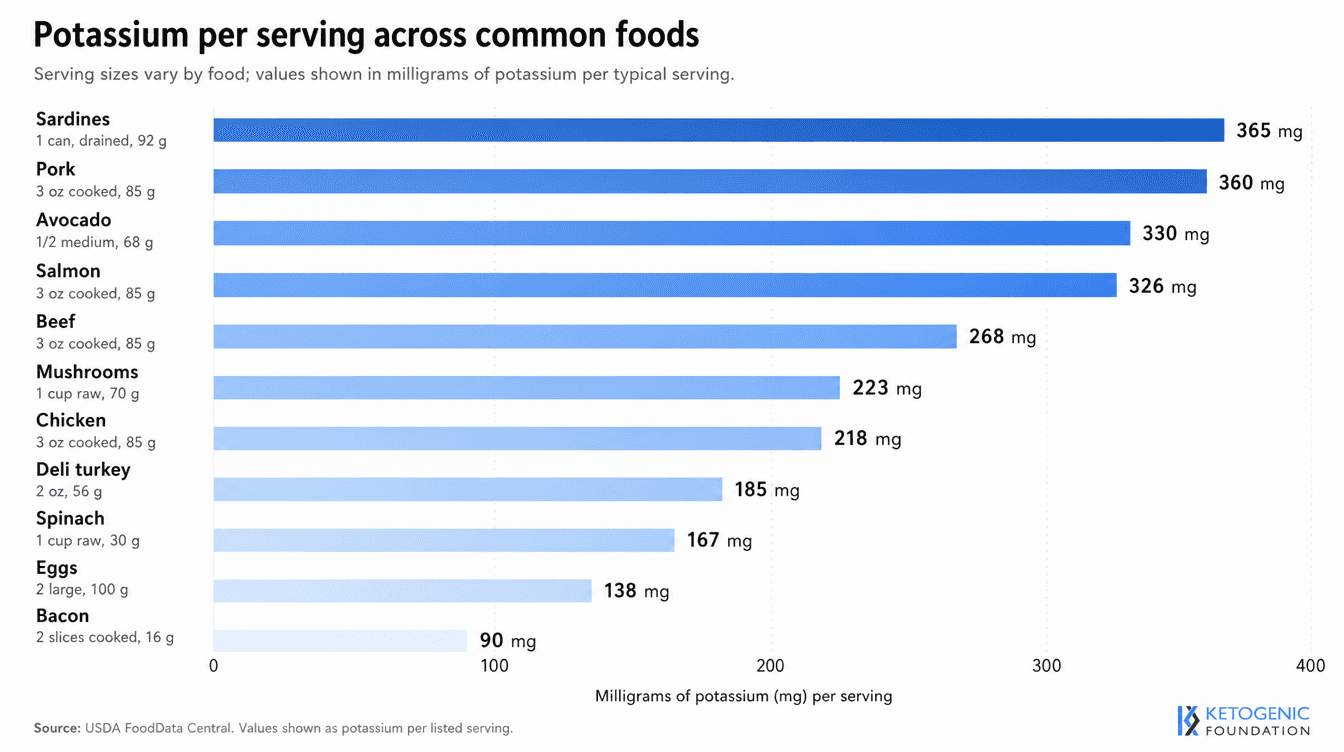
Bar chart comparing potassium content per 100g of avocado, salmon, bacon, deli turkey, canned sardines, eggs, spinach. Illustrate the relative potassium poverty of processed meats.
3.2 Fat Sources
Cooking Fats and Preferred Sources
Fat Type
Guidance
Ghee
Ideal for high-heat cooking; ghee preferred for lactose-intolerant people; high in butyrate
Butter
For lower-heat cooking (<350 degrees F)
Coconut oil
Rich in MCTs — bypass standard fatty acid transport and are rapidly converted to ketones; good for moderate-heat cooking
Tallow / Lard
Highly stable for cooking; largely MUFA and SFA; historically were primary cooking fats before being displaced by industrial seed oils.
High oleic safflower & high oleic sunflower
Low omega-6 versions. Though less-commonly available, excellent options for cooking and less expensive olive oil alternatives
Olive oil (regular/light and extra-virgin)
MUFA-predominant; best for cold applications or low-to-medium heat; high in oleocanthal (natural anti-inflammatory)
Avocado oil
High smoke point; MUFA-predominant; neutral flavor; excellent for high-heat cooking
Canola Oil (high oleic, but moderate omega-6 and omega 3)
Due to moderate PUFA, avoid high heat cooking, good in salad dressing and as a mayonnaise base
Fats to Limit: High Omega-6 Seed Oils
Corn, soybean, sunflower, safflower, cottonseed, and grapeseed oils are rich in linoleic acid (LA), an omega-6 polyunsaturated fatty acid. Modern consumption levels of these oils are estimated to be 15–20 times higher than ancestral levels, promoting the production of proinflammatory eicosanoids and adversely shifting the omega-6:omega-3 ratio (Simopoulos 2016). Intervention trials specifically testing n-6 fatty acid reduction have demonstrated cardiovascular benefit (Ramsden 2010). Counsel people to eliminate high omega-6 seed oils from home cooking and use butter, ghee, olive oil, avocado oil, canola oil, tallow, or coconut oil instead.
Artificial trans fats, like partially hydrogenated oils, are universally recommended to be avoided due to their negative impacts on inflammation (Lopez-Garcia 2005) and on LDL and HDL cholesterol (Mensink 1990). Of note, the FDA allows products to list 0 g trans-fat if the product contains less than 0.5 g per serving. Check the ingredient lists for partially hydrogenated oils, shortening, or hydrogenated vegetable oils – these indicate trans fats and should be avoided.
Practical Tips:
- When dining out, it can be nearly impossible to follow all of these rules on fats. So, encourage patients to do the best they can when at home and allow for some flexibility when dining out at a restaurant or other social setting. - One useful restaurant staple is butter – real butter, not the ‘whipped ' version. If they serve bread, keep the butter but send the bread back. With meat, fish, or poultry entree, avoid fancy sauces and ask for a side of 2 pats of butter. That 200 extra calories with a modest protein portion reduces cost and adds a lot of satiety.
3.3 Carbohydrate Sources: Selection Framework
Non-starchy vegetables are an important part of a WFKD as a source of electrolytes, minerals, vitamins, fiber, and micronutrients. They provide a great vehicle for fat for satiety (like butter on broccoli). But they are also primary carbohydrate sources on a WFKD and need to be tracked. Leafy greens, cruciferous vegetables, zucchini, cucumbers, green beans, peppers, mushrooms, and asparagus can be consumed in unlimited quantities. Small amounts of berries, tomatoes, onions, and garlic are manageable. Foods to avoid include all grains, starchy vegetables (potatoes, sweet potatoes, root vegetables, winter squash), legumes (beans and peas), most fruits, all fruit juices, and all caloric sugars and sweeteners.
For sweetening needs, xylitol*, stevia, and monk fruit are appropriate options with minimal to negligible glycemic impact (Noda 1994). Avoiding or minimizing allulose, sorbitol, and erythritol is recommended due to gastrointestinal side effects. Of note, not all non-caloric or low-caloric sweeteners behave equivalently. Practitioners must understand the glycemic and gastrointestinal profiles of commonly encountered sweeteners to counsel patients accurately — particularly those using commercially prepared “keto” and “sugar-free” products in which sweetener identity is not prominently disclosed.
Pro tip: Let your patient/client know that sweeteners are optional and if they choose to include a sweet treat or to sweeten up their coffee, yogurt, etc, it's been to choose one of the alternatives mentioned and to go slow, introducing a little at a time while paying attention to any impact on hunger, cravings, blood sugar and GI symptoms.
Ketogenic therapy is contraindicated in certain inborn errors of metabolism. Screen for fatty-acid oxidation and pyruvate carboxylase disorders before initiation.
*xylitol is well-tolerated by humans but may have toxic effects on dogs.
3.4 Meal Planning: Teaching a Practical Skill
The WFKD Plate-Building Framework
Step 1 — Anchor with Protein: Choose one or two protein sources that deliver your target grams for this meal (typically 30–50g per meal for most adults). This is the non-negotiable center of the plate.
Step 2 — Fill with Non-Starchy Vegetables: 1–2 cups of non-starchy vegetables for vitamins, fiber, micronutrients, and volume.
Step 3 — Add Fat for Flavor and Satiety: Add cooking fats, dressings, butter, or toppings that complete the meal. Stop when satisfied — do not force fat beyond satiety. Note: commercial salad dressings and sauces are often soy oil based, and many contain sugar under a variety of names.
Step 4 — Assess Carbohydrate Content: Everything else is managed by the foods you have chosen. Track for the first 4–6 weeks while monitoring ketone levels; transition to intuitive eating once patterns are established.
Sodium Needs in Meal Planning
Sodium requirements increase substantially during ketogenic adaptation and maintenance. Insulin reduction diminishes renal sodium retention, accelerating urinary sodium excretion (Volek 2011). To maintain optimal health and function, most people require 3,000–4,000 mg of sodium per day on a WFKD — well above standard public health recommendations intended for high-carbohydrate populations. Note that exceptions for this level of sodium intake are patients with high blood pressure, edema, or congestive heart failure on diuretic medications.
Inadequate sodium intake is among the most common causes of early adaptation symptoms (aka, keto flu; fatigue, headache, postural dizziness, constipation) and is easily corrected.
Proactively counsel people to increase sodium intake at meal planning. Do not wait for symptoms. Practical strategies include:
Strategy
Notes
Bone broth (homemade or commercial)
500–700 mg sodium per 8oz cup; provides glycine, proline, and collagen precursors; can be sipped between meals as a sodium delivery vehicle; choose low-additive brands or make from scratch
Bouillon cubes or paste (e.g., Better Than Bouillon)
~800–1,000 mg sodium per serving; convenient and inexpensive; dissolve in hot water as a savory “electrolyte drink”; check for added sugars or starches in flavored varieties
Kalamata olives
~60–80 mg sodium per olive; also provide MUFA and vitamin E; practical snack that adds sodium incrementally throughout the day
Unsweetened dill pickles and pickle brine
~200–300 mg sodium per spear; pickle brine is an underutilized electrolyte source; confirm no added sugars (read label)
Table salt / sea salt (deliberate use)
Counsel people to salt food to taste and not restrict; add a pinch of salt to water or electrolyte drinks; this direct approach is often the most efficient correction for sodium deficiency symptoms
Salt-preserved fish (anchovies, salt cod, canned sardines in brine)
High sodium and high potassium simultaneously; excellent dual-electrolyte sources for people struggling with both
Clinical Pearl: Sodium Phobia is a Common Barrier
Many patients arrive with deeply conditioned concern about sodium intake, often reinforced by years of standard dietary advice. Explicitly address this: the metabolic context of a WFKD fundamentally alters renal sodium handling. Adequate sodium is not optional — it is a therapeutic requirement. Patients who are prescribed antihypertensive medications (especially diuretics) require coordinated physician oversight, as sodium and fluid needs shift substantially in the early weeks of ketogenic adaptation (Volek 2011).
Sample Day Meal Plan
Meal
Components
Breakfast
2 whole eggs scrambled in 1 tbsp butter with sautéed spinach (1 cup) and 2 strips bacon; coffee with heavy cream → ~29g protein, 5g carb, 40g fat
Lunch
4 oz canned salmon or tuna mixed with 2 tbsp avocado or canola mayo, served over romaine lettuce with sliced cucumber and a few cherry tomatoes; 1/4 avocado → ~30g protein, 8g carb, 32g fat
Dinner
6 oz grass-fed ground beef (80/20) cooked as burger patty, topped with 1 oz cheddar, served over 2 cups roasted zucchini and broccoli cooked in olive oil → ~43g protein, 9g carb, 40g fat
Snack (if needed)
2 oz macadamia nuts → ~4g protein, 4g carb, 24g fat<br>1 oz walnuts → 4g protein, 5g carb, 18g fat
Daily Total
~104g protein, 26g carbohydrate, 136g fat, ~1,820 kcal
PLEASE NOTE: When adapting the above menu for the individual, portion sizes should be adjusted based on body size / protein needs.
Ketogenic therapy is contraindicated in certain inborn errors of metabolism. Screen for fatty-acid oxidation and pyruvate carboxylase disorders before initiation.
Pro Tip: Explaining why patients should count total instead of net carbohydrates
The calculation of net carbs subtracts fiber and sugar alcohols, making the assumption that there is no effect on blood glucose and that all individuals respond similarly. Neither is true. Therefore, especially when initiating a WFKD, the most reliable approach is to count total carbohydrates, relying on real, whole foods as the majority of intake while allowing for lifestyle and personal preferences to be considered.
3.5 Beverage Selection
Beverage choices are frequently overlooked during initial WFKD counseling, yet beverages represent a common hidden source of carbohydrates, insulin-stimulating compounds, and electrolyte dilution. Practitioners should review beverage selection explicitly with patients at initiation and revisit it during follow-up, as non-compliant beverage habits are among the most frequent reasons for unexplained carbohydrate overconsumption and failure to achieve or maintain ketosis.
Acceptable Beverages
Beverage
Notes
Water (still or sparkling)
Primary hydration vehicle; ad libitum; plain or sparkling water (e.g., tap water, club soda, mineral water) is fully acceptable; counsel people to check flavored sparkling waters for added sugars or citric acid (generally negligible)
Coffee (black, or with acceptable additions)
Acceptable and well-tolerated; heavy cream, unsweetened almond or coconut milk, and MCT oil are appropriate additions; avoid flavored syrups and sweetened creamers; butter coffee (“bulletproof coffee”) is an option for fat intake but should not displace protein-containing foods for breakfast.
Tea (unsweetened)
All varieties acceptable — green, black, white, herbal; verify herbal and fruit tea blends are generally unsweetened and carbohydrate-free; avoid chai lattes and bottled sweetened teas
Electrolyte drinks (unsweetened or keto-formulated)
Essential for most people, particularly in the first 4–6 weeks; recommend products with sodium, potassium, and magnesium; avoid products with sucrose, dextrose, or maltodextrin; Liquid IV, Gatorade, and most commercial sports drinks are not appropriate; LMNT, Ultima Replenisher, and similar keto electrolytes are appropriate
Bone broth
A dual-purpose beverage: electrolyte delivery (sodium, potassium) and protein (collagen, glycine)
Dry wine (red or white) — limited
Approximately 2–4g carbohydrate per 5oz serving; generally compatible with maintenance-phase WFKD in moderate amounts; avoid dessert wines (port, sherry, sauterne) and sparkling wines with added sugar
Spirits (unflavored) — limited
Vodka, gin, tequila, whiskey: essentially zero carbohydrate; appropriate in moderate amounts on WFKD; mixers are the primary carbohydrate risk — avoid juice, tonic water, and sweetened mixers; use sparkling water, bitters, or citrus wedge instead
Beverages to Avoid or Minimize
Beverage
Notes
Fruit juice (all varieties)
Among the highest glycemic liquid carbohydrate sources available; even 4oz of orange or apple juice provides ~12–16g carbohydrate with no fiber; incompatible with WFKD
Sweetened sodas and energy drinks
20–40+g carbohydrate per serving; incompatible; “zero” versions with aspartame or acesulfame-K may stimulate cephalic insulin response in sensitive individuals — acceptable in moderation but not ideal
Milk (cow’s milk)
12g lactose per 8oz cup; incompatible at the quantities typically consumed; unsweetened almond and coconut milk (1–2g carb/cup) are appropriate substitutes
Smoothies and blended drinks
Even “healthy” smoothies commonly contain 40–80g carbohydrate from fruit; protein shakes require label scrutiny — many contain maltodextrin, oat flour, or added sugars
Sports drinks (Gatorade, Powerade, etc.)
21–34g carbohydrate per bottle; sodium and potassium content is inadequate for WFKD needs regardless; replace with keto-formulated electrolyte products
Flavored lattes and coffeehouse drinks
20–50+g carbohydrate from flavored syrups and milk bases; Starbucks, Dunkin’, and similar chains can be navigated with modifications (unsweetened, heavy cream substitutions) but require people education
Kombucha
Variable and often underreported carbohydrate content (4–15g per bottle); residual fermentation sugars may be significant; use with caution; verify net carbohydrate per serving before recommending
Beer
10–15g carbohydrate per standard serving; incompatible; “light” beers (3–6g) may be tolerable in strict moderation during maintenance — not during active ketogenic induction or most therapeutic applications
Practitioner Tip: The Hidden Carbohydrate Audit
When a patient reports adequate food logging but suboptimal ketones or unexplained stalls, request a dedicated 3-day beverage log. Beverages are a common source of hidden carbohydrate. Common revelations include: daily flavored lattes, sweetened electrolyte products, fruit-based "wellness shots," and kombucha consumption that people do not categorize as food.
3.6 Teaching Patients to Read a Food Label
Food label literacy is a foundational skill for WFKD implementation. Patients unfamiliar with label reading frequently consume products that undermine ketosis despite genuine adherence intentions. Teaching this skill explicitly — rather than assuming it — is a high-yield investment in the first two clinical encounters.
While you may already be very familiar with label reading, it’s not as common for the consumer. For a WFKD, the focus of label-reading is to count total carbs and protein, plus the portion size, but understanding both the layout and how to interpret are important first steps.
Step-by-Step Label Evaluation Framework
Step 1 — Check the Serving Size First. All label values (carbohydrates, calories, fats) are expressed per serving, not per package. Many products are technically multi-serving containers packaged in single-serving format. A bag of nuts labeled “2 servings” that most people consume in one sitting doubles the carbohydrate consumption. Instruct people to determine how many servings they will actually consume before performing any other calculations.
Step 2 — Find Total Carbohydrate (not “net carbs”). The FDA-mandated Nutrition Facts panel reports Total Carbohydrate (which we use for tracking dietary carbohydrate). This is the number to use as a starting point. The line immediately below it breaks down dietary fiber and total sugars (and, since 2020, added sugars). Some products also voluntarily report sugar alcohols. In general, if there are more than 5g of TOTAL carbohydrate per serving, the food should be avoided, especially early in the patient journey.
Step 3 — Identify the Sweetener(s). After reviewing the carbohydrate panel, inspect the ingredient list for sweeteners. Labels are required to list ingredients in descending order by weight. The first three to five ingredients represent the bulk of the product. Red flags: maltitol, sorbitol, sucrose, dextrose, corn syrup, brown rice syrup, honey, agave, evaporated cane juice. Please note, there are a number of other sweeteners used – this list is not exhaustive.
Green flags: xylitol, stevia, monk fruit.
Step 4 — Assess Fat Quality. Inspect the ingredient list for oils: soybean oil, sunflower oil, safflower oil, corn oil, cottonseed oil. These are common in packaged keto snacks, mayonnaise, and dressings. Prefer products using avocado oil, olive oil, canola oil, coconut oil, butter, or ghee.
Step 5 — Review Protein Adequacy. For meal replacement products, protein shakes, and bars, confirm that the protein source is high-quality (whey isolate, casein, egg white, beef protein). Beware of products with the protein from collagen only — collagen is not a complete protein and should not be the sole protein source.
Label Red Flags: Summary Checklist for People
■ Total carbohydrates >5 per serving
■ Maltitol, sorbitol, or sucralose as primary sweetener
■ Soybean oil, sunflower oil, or corn oil in ingredient list
■ “Sugar-free” front-of-pack claim without label verification
■ Serving size smaller than what the person will actually consume
■ Protein from collagen only (not a complete protein source)
3.6 The Limited Value of Food Logging
The most powerful behavioral feedback tool for those following a WFKD is daily fingerstick blood BHB. Additional detail will be provided in Module 4: Monitoring, Tracking, and Adjusting. Briefly, a advantageous and unique aspect of a WFKD is that there is an objective measurement of adherence: blood ketones. When people consume carbohydrate above their individual threshold (typically ~ 50 g CHO / d), ketone production drops rapidly and reliably. In addition to the value of measuring ketones for the nutrition / behavior change professional, research also shows that measuring ketones is a valuable behavioral tool for people following a WFKD (Volek 2011). Other dietary approaches do not have any reliable or valid objective marker of adherence.
Although food logging is commonly used in dietetics and other nutrition-based practices, the value of food logging is extremely limited, and food logging and / or calorie counting are not required for success. Self-reported dietary assessment—whether by prospective food logging, retrospective 24-hour recalls (24HR), food frequency questionnaires (FFQs), or weighed/estimated food records—shares a core, well-documented flaw: it cannot be reconciled with objective recovery biomarkers, and the discrepancy is large, systematic, and non-random. Validation against doubly labeled water (DLW), the reference standard for total energy expenditure, consistently reveals pervasive underreporting of energy intake. In the landmark OPEN Study, Subar et al. (2003) found that men underreported energy on 24HRs by 12–14% and on FFQs by 31–36%, with women underreporting by 16–20% and 34–38%, respectively, alongside parallel protein underreporting verified against urinary nitrogen. Critically, this error is not mere “noise” that averages out: Kipnis et al. (2003) showed that the errors in 24HRs and food records are correlated with true intake and with FFQ errors, violating the independence assumption needed to use them as calibration reference instruments—so they attenuate diet–disease associations and bias risk estimates in ways statistical adjustment cannot fully repair.
The magnitude remains severe even in modern, multiple-pass, app-based tools; Bradley et al. (2019) validated the online Intake24 recall against DLW and found participants under-reported energy by roughly 25%, with extremely wide limits of agreement (−73% to +68%), underscoring that the problem is individual-level imprecision, not just group-level bias. At the population-surveillance level, the data are not merely imprecise but physiologically impossible: across NHANES 1971–2010, the mean ratio of reported energy intake to basal metabolic rate for the full female sample was 1.19, outside the physiologically plausible range, and 42.5% of participants reported intakes below the level needed to sustain a comatose patient—leading these authors to characterize memory-based methods as yielding numbers incompatible with life and inadmissible as scientific evidence (Archer 2013).
Ioannidis (2018) extends this critique to the entire downstream enterprise, contending that the implausible benefit and risk estimates associated with diet largely reflect the cumulative biases of this research—extensive residual confounding and selective reporting—and that the field, built atop these flawed instruments, requires radical reform. Beyond validity, these instruments carry well-known operational weaknesses: reliance on fallible episodic memory and portion-size estimation, reactivity (recording changes what people eat), high respondent and trained-interviewer burden, poor capture of episodically consumed foods, dependence on incomplete food-composition databases, and limited day-to-day reliability that requires many repeated administrations to approximate usual intake—collectively rendering any single record a weak proxy for habitual consumption.
As such, the use of food logging universally is not recommended; the information is unlikely to be accurate and the “return on time investment” - for both the person and the professional – is severely limited. While there may be some utility for occasional use of diet records as a downstream method of troubleshooting, the above cautions should be considered in the process. The qualitative aspects of the food log (ex: types of foods) are more likely to provide value as compared to the quantitative aspects.
3.7 Addressing Socioeconomic, Cultural, and Financial Challenges
A WFKD does not require premium ingredients, specialty grocery stores, or high discretionary income. However, practitioners who fail to proactively address cost, cultural familiarity, and access barriers will find that WFKD adherence systematically underperforms in lower-resourced populations — not because the diet is inherently inaccessible, but because the counseling model has not been adapted. This section provides practical frameworks for expanding WFKD access across diverse people contexts. Remember that the goal is to reduce one’s carbohydrate intake and while the focus should be on real, whole foods as much as possible, a complete dietary overhaul can be overwhelming and feel unachievable, especially without addressing these important considerations.
Financial Barriers: Cost-Effective WFKD Implementation
There is a common misconception that a WFKD requires expensive specialty foods (organic beef, wild-caught salmon, boutique nut butters). This is not a nutritional necessity. The following principles support cost-effective implementation:
Food
Cost-Optimization Strategy
Eggs (XL)
Among the lowest cost-per-gram-of-protein foods available across all dietary patterns; 12 eggs for ~$2–5 delivers ~84g protein; encourage daily egg consumption as the dietary anchor
Canned fish (sardines, tuna, salmon, mackerel)
Highly nutrient-dense, omega-3 rich, and cost-effective; sardines in olive oil (~$1.50–2.50/can) are among the best nutritional values in any food category; store well without refrigeration
Ground beef (70/30 or 80/20)
More affordable per pound than lean cuts; higher fat content is preferable on WFKD; 1 lb of 80/20 ground beef at $4–6 provides 3–4 servings; buy in bulk when on sale and freeze in 4-8 oz portions for convenient use.
Pork shoulder, pork belly, chicken thighs (skin-on)
Significantly cheaper than premium cuts; bone-in and skin-on cuts provide superior fat content for WFKD; pork shoulder for slow cooker preparation is among the lowest-cost protein options
Frozen vegetables & canned vegetables in water
Nutritionally equivalent to fresh for most micronutrients; significantly cheaper and reduce food waste; broccoli, spinach, cauliflower, zucchini, and green beans are widely available frozen at low cost
Butter (store brand)
Store brands deliver the same macronutrient profile at significantly lower cost
Cabbage and frozen leafy greens
Cabbage is one of the most affordable non-starchy vegetables available year-round; frozen spinach and kale deliver superior micronutrient density per dollar compared to bagged fresh options
Clinical Pearl: The "Expensive Keto" Framing is a Barrier
Patients from lower-income households may disengage from WFKD counseling when they perceive the diet as financially inaccessible. Practitioners should proactively address this in the first session by providing a concrete low-cost meal plan and grocery list rather than waiting for the people to raise cost as a barrier. A weekly WFKD food budget of $50–70 for a single adult is achievable with eggs, canned fish, frozen vegetables, ground beef, butter, canola oil, olive oil, and cabbage as dietary anchors. A best-practice for the dietitian / nutritionist / behavior change professional is to collect a typical food shopping list from the person and adapting to meet their needs on a WFKD, vs starting with a new list that is unfamiliar to the person.
Cultural Considerations and Food Familiarity
Dietary patterns are embedded in cultural identity, family practices, religious observance, and community food environments. Practitioners who approach WFKD counseling as a universal template without cultural adaptation will encounter avoidable adherence barriers. The following guidance supports culturally responsive WFKD implementation:
Assess before prescribing. Ask patients about their household’s typical protein sources, cooking methods, and food preparation norms before introducing WFKD principles. This information should guide the first meal plan, which should feature familiar proteins and preparations wherever possible.
Identify culturally familiar WFKD-compatible proteins. Many traditional food cultures are already protein and fat-forward. Examples: carnitas, barbacoa, and chicharrón (Mexican); jerk chicken, oxtail, and escovitch fish (Jamaican/Caribbean); kibbeh and shawarma without pita (Middle Eastern); bibimbap deconstructed without rice (Korean); egusi soup and suya (West African). The protein and fat components of many traditional dishes are WFKD-compatible — the starch (rice, tortilla, bread, fufu) is the element requiring substitution. A discussion with the person about what they are willing to swap out and what – if anything – is a non-negotiable (i.e. when and why) for them. Some foods / occasions may require a deeper discussion.
Address spice and flavor preservation. Many people assume a ketogenic diet means bland, Western-style food. Explicitly demonstrate that spice blends, herb-heavy sauces, and bold flavors are fully compatible with WFKD. Adobo, jerk seasoning, harissa, garam masala, mole (without thickening agents), chimichurri, and most traditional herb and spice preparations are carbohydrate-negligible and should be actively encouraged.
Accommodate religious dietary laws. Halal and kosher requirements influence protein sourcing and meat preparation but are generally compatible with WFKD. Kosher law prohibiting the mixing of meat and dairy within a meal can create challenges for fat sourcing during meat-based meals — olive oil, avocado oil, and schmaltz (rendered chicken fat) are appropriate WFKD-compatible cooking fats in this context. Halal requirements are compatible with WFKD without significant modification.
Navigate food deserts and limited access environments. In communities with limited fresh food access, WFKD implementation should be anchored in shelf-stable, widely available foods: canned fish, canned meats, eggs, frozen vegetables, pork rinds, cooking oils, and butter. Dollar stores and discount grocery chains often carry these staples. Farmers markets and community-supported agriculture (CSA) programs may offer affordable fresh vegetables in areas where produce quality is otherwise limited.
Challenge
Culturally Responsive Strategy
Rice as dietary staple (South Asian, East Asian, Caribbean contexts)
Cauliflower rice provides familiar texture and volume; shirataki rice (konjac) is nearly zero-carb; explicitly acknowledge the cultural significance of rice rather than dismissing it
Legumes as primary protein source (vegetarian South Asian, Latin American, Middle Eastern)
Address the carbohydrate challenge directly; identify compatible plant proteins (tempeh, hemp seeds); consider whether a modified low-carbohydrate diet (not strict WFKD) may be more appropriate and sustainable for this people
Bread-centric meal structure (Mediterranean, Middle Eastern, European)
Identify the functional role of bread in the meal (vehicle for protein/fat, social ritual, flavor); offer WFKD-compatible alternatives (lettuce wraps, cloud bread, portobello mushrooms) while acknowledging the substitution is imperfect
Limited cooking infrastructure (shared kitchen, no stove, food insecurity)
Build meal plans around foods requiring no cooking or minimal preparation: canned fish, hard-boiled eggs, cheese, nuts, salads, raw vegetables; acknowledge practical barriers without judgment and prioritize simplicity over optimization
Practitioner Reflection: Cultural Humility in WFKD Counseling
A patient's apparent non-adherence may reflect unaddressed cultural, practical, or financial barriers rather than lack of motivation. Before attributing poor adherence to willpower or commitment, conduct a structured barriers assessment: What foods are available in the household? Who prepares meals? What is the people's food budget? Are there family members who resist dietary change? What cultural or religious requirements shape food selection? This information is essential for building a sustainable, individualized WFKD implementation strategy.
Disclaimer
Disclaimer
This content is provided by The Ketogenic Foundation for educational and informational purposes only and does not constitute medical, nutritional, dietetic, or other professional advice. It is not intended to diagnose, treat, cure, or prevent any disease. This content does not create any professional relationship or duty of care between The Ketogenic Foundation and any reader, nor does it create or replace any practitioner–people or provider–patient relationship. Nothing in this content expands any reader's scope of practice; each professional remains solely responsible for acting within the limits of their own license, certification, credential, and applicable federal, state, and local law, and for referring to or coordinating with an appropriately licensed professional where required. Individualized clinical or nutritional decisions should be made in consultation with a qualified, appropriately licensed healthcare professional. Reliance on this content is at the user's own discretion and risk.
Module 3 — Knowledge Assessment
QUESTION 1
A person following a WFKD reports adequate blood ketones (1.2 mmol/L) but persistent muscle cramps and fatigue. Her dietary log shows near-zero vegetable intake and a diet dominated by eggs, bacon, and cheese. What is the most likely nutritional deficit, and what modification would address it?
A. Potassium and magnesium deficiency compounded by absence of non-starchy vegetables; increase leafy greens, avocado, and salmon; supplement Slow-Mag at bedtime
B. Vitamin C deficiency; recommend citrus fruit supplementation
C. Iron deficiency; recommend increased red meat intake
D. Sodium deficiency; increase bacon intake
Reveal answer
QUESTION 2
A plant-based person plans to get her protein primarily from legumes (black beans, chickpeas). What is the primary challenge this presents for a therapeutic WFKD?
A. Legumes are deficient in all essential amino acids
B. Legumes carry substantial carbohydrate loads (~20–40g carb per serving) incompatible with maintaining therapeutic ketosis at 20–50g total carbohydrate per day
C. Legumes contain too much fat for a ketogenic diet
D. Legume proteins are complete and require no dietary modification
Reveal answer
QUESTION 3
A patient with the goal of weight-loss is not hungry and consuming only ~1,200 kcal/day while eating to apparent satiety on a WFKD with adequate protein. What is the most appropriate response?
A. Instruct her to force additional fat intake via fat bombs to reach at least 1,800 kcal/day
B. Reassure her that satiety-driven caloric reduction is a known benefit of the WFKD; as long as protein is adequate and weight loss is appropriate, this is physiologically normal
C. Increase carbohydrate intake to stimulate appetite
D. Recommend parenteral nutritional supplementation
Reveal answer
QUESTION 4
A person with limited grocery access lives in a food desert and reports a weekly food budget of $50. Which of the following represents the most nutritionally complete and cost-effective WFKD food anchor strategy?
A. Grass-fed beef, wild-caught salmon, and organic spinach — the nutritional quality justifies budget prioritization
B. Protein powder, peanut butter, and bagged salad — highest protein density per dollar
C. Chicken breast, brown rice, and steamed vegetables — lowest cost per calorie
D. Eggs, canned sardines, frozen broccoli and spinach, butter, and ground beef — provides complete protein, adequate fat, micronutrients, and electrolytes within budget
Reveal answer
QUESTION 5
In a discussion with a person, their food intake appears ketogenic but her ketones remain below 0.5 mmol/L. Upon discussing her full intake you notice she never mentioned beverages. What is might be a contributing factor to the ketone values falling below the threshold for nutritional ketosis?
A. Her blood ketone meter is malfunctioning
B. Beverage intake has no impact on blood ketone levels
C. She may be consuming carbohydrate-containing beverages (flavored drinks, coffee additives, kombucha, or sweetened electrolytes)
D. She needs to increase dietary fat to achieve ketosis
Reveal answer
References
- Archer E, Hand GA, Blair SN. Validity of U.S. nutritional surveillance: NHANES caloric energy intake data, 1971–2010. PLoS ONE. 2013;8(10):e76632. - Daley CA, Abbott A, Doyle PS, Nader GA, Larson S. A review of fatty acid profiles and antioxidant content in grass-fed and grain-fed beef. Nutrition journal. 2010 Dec;9(1):10. - DiNicolantonio JJ, O’Keefe JH, Wilson W. Subclinical magnesium deficiency: a principal driver of cardiovascular disease and a public health crisis. Open Heart. 2018;5(1):e000668. - Han Y, Choi BR, Kim SY, et al. Gastrointestinal tolerance of D-allulose in healthy and young adults: a non-randomized controlled trial. Nutrients. 2018;10(12):2010. - Ioannidis JPA. The challenge of reforming nutritional epidemiologic research. JAMA. 2018;320(10):969–970. doi:10.1001/jama.2018.11025 - Kipnis V, Subar AF, Midthune D, et al. Structure of dietary measurement error: results of the OPEN biomarker study. Am J Epidemiol. 2003;158(1):14–21. - Lenighan YM, McNulty BA, Roche HM. Dietary fat composition: replacement of saturated fatty acids with PUFA as a public health strategy, with an emphasis on α-linolenic acid. Proc Nutr Soc. 2019;78(3):234–245. - Livesey G. Health potential of polyols as sugar replacers, with emphasis on low glycaemic properties. Nutr Res Rev. 2003;16(2):163–191. - Lopez-Garcia E, Schulze MB, Meigs JB, Manson JE, Rifai N, Stampfer MJ, Willett WC, Hu FB. Consumption of trans fatty acids is related to plasma biomarkers of inflammation and endothelial dysfunction. The Journal of nutrition. 2005 Mar 1;135(3):562-6. - Melina V, Craig W, Levin S. Position of the Academy of Nutrition and Dietetics: vegetarian diets. J Acad Nutr Diet. 2016;116(12):1970–1980. - Mensink RP, Katan MB. Effect of dietary trans fatty acids on high-density and low-density lipoprotein cholesterol levels in healthy subjects. New England Journal of Medicine. 1990 Aug 16;323(7):439-45. - Noda K, Nakayama K, Oku T. Serum glucose and insulin levels and erythritol balance after oral administration of erythritol in healthy subjects. Eur J Clin Nutr. 1994;48(4):286–292. - Nogoy KMC, Sun B, Shin S, Lee Y, Zi Li X, Choi SH, Park S. Fatty Acid Composition of Grain- and Grass-Fed Beef and Their Nutritional Value and Health Implication. Food Sci Anim Resour. 2022 Jan;42(1):18-33. doi: 10.5851/kosfa.2021.e73. Epub 2022 Jan 1. PMID: 35028571; PMCID: PMC8728510. - Ramsden CE, Hibbeln JR, Majchrzak SF, Davis JM. n-6 fatty acid-specific and mixed polyunsaturate dietary interventions have different effects on CHD risk: a meta-analysis of randomised controlled trials. Br J Nutr. 2010;104(11):1586–1600. - Simopoulos AP. An increase in the omega-6/omega-3 fatty acid ratio increases the risk for obesity. Nutrients. 2016;8(3):128. - Stone MS, Martyn L, Weaver CM. Potassium intake, bioavailability, hypertension, and glucose control. Nutrients. 2016;8(7):444. - Subar AF, Kipnis V, Troiano RP, et al. Using intake biomarkers to evaluate the extent of dietary misreporting in a large sample of adults: the OPEN Study. Am J Epidemiol. 2003;158(1):1–13. - Volek JS, Phinney SD. The Art and Science of Low Carbohydrate Living. Miami, FL: Beyond Obesity LLC; 2011.
Contact Us
952 School Street, Suite 212
Napa, CA 94559